Kennel Club News
|
|
|
|
Working for healthy, happy dogs...
|
|
|
|
Kennel Club customers are advised that members of staff will transition to working from home during the course of this week as a result of the coronavirus outbreak. By the close of business on Friday, the Clarges Street offices will be closed. Soon after this, the Aylesbury site will also close, once the Kennel Club is confident that calls and business processing will not be compromised.
The Kennel Club will endeavour to keep its services running as smoothly as possible in these times with Aylesbury staff working between 10am and 4pm. Please note that during this closure period, there may be delays to respond to postal correspondence, therefore we would ask our customers to use email to contact staff where possible.
The Kennel Club will be making further announcements as the situation develops and will continue to update its website with current information as appropriate. Please note that Kennel Club goods and services are also still available direct from this website. Please visit www.thekennelclub.org.uk.
For Petlog enquiries, please continue to use the Petlog Help Centre at https://support.petlog.org.uk/.
To contact the Kennel Club via email please use the link listed below and include in the subject line which area you require assistance with:
Agility – Agility.Mailbox@thekennelclub.org.uk
Art Gallery – artgallery@thekennelclub.org.uk
Assured Breeder Scheme – abs@thekennelclub.org.uk
Breed Judges/Regulations – breedshows@thekennelclub.org.uk
Breeder Services – hbs@thekennelclub.org.ukLitter registrations – web.registrations@thekennelclub.org.uk
Canine Activities – canine.activities@thekennelclub.org.uk
Crufts – crufts@thekennelclub.org.uk
Discover Dogs – discoverdogs@thekennelclub.org.uk
Emblehope – emblehope@thekennelclub.org.uk
European Open 2020 – eo2020@thekennelclub.org.uk
Field Trials – FT.Secretary@thekennelclub.org.uk
Good Citizen Dog Scheme – gcds@thekennelclub.org.uk
Governance and Education – gov.education@thekennelclub.org.uk
Health – health@thekennelclub.org.uk
International Canine Health Awards – ICHA@thekennelclub.org.uk
Judges Critiques – JudgesCritiques@thekennelclub.org.uk
Kennel Club Building (bookings) – kc.building@thekennelclub.org.uk
Kennel Club Academy – KC.Academy@thekennelclub.org.uk
Library – library@thekennelclub.org.uk
Marketing – marketing@thekennelclub.org.uk
Obedience – Obedience.Mailbox@thekennelclub.org.uk
Picture Library – picturelibrary@thekennelclub.org.uk
Publications – publications.mailbox@thekennelclub.org.uk
Scruffts – scruffts@thekennelclub.org.uk
Shows and Societies – sass@thekennelclub.org.uk
Social Media – social.media@thekennelclub.org.uk
Website – web.admin@thekennelclub.org.uk
Working Dog Activities – wda@thekennelclub.org.uk
Working Trials – WorkingTrials.Mailbox@thekennelclub.org.uk
Young Kennel Club – ykc@thekennelclub.org.uk
A further announcement will be made once the Clarges Street and Aylesbury offices have reopened. We thank all our customers for your understanding and patience during this challenging period.
The Kennel Club has recently approved the following changes to the regulations for agility which will come into effect on 1 January 2020.
1. The below regulation has been amended to take in to account that the Wall has been included as a separate piece of equipment in the regulations.
Amendment to Regulation H(1)(B)1.a.(6)
TO:
Electronic timing gates – The only obstacles allowed at the Start and Finish of a Standard Agility or Jumping Course are; Hurdle, Wall, Spread Jump, Brush Jump, Long Jump, Tyre Wishing Well, Pipe Tunnel. The electronic timing gates should be positioned within 30cm in front of the first obstacle and within 30cm after the last obstacle. The distance between the electronic timing gates should be no less than the width of the part of the obstacle the dog must negotiate. Whenever possible the timing gates should be placed within the width of the Hurdle wings, or in the case of the Wall, within the pillars. For the Long Jump, Tyre, Wishing Well and Pipe Tunnel, the timing gates should be placed as close as possible to the outside edge of the obstacle without impeding the dog's natural path.
N.B. This regulation should also apply if manual timing is used in conjunction with start/finish poles. (Insertions in bold)
2. The below regulations have been amended to allow for Championship classes to be held at the new Intermediate height.
Amendment to Regulations H10.c.(3) H(1)6.a, H(1)(B)1.a.(2) and K2.g
TO:
c. Contents of Schedule
(3) Kennel Club Championship Agility Certificate (Large Dogs) and / or Kennel Club Championship Agility Certificate (Intermediate Dogs) and / or Kennel Club Championship Agility Certificate (Medium Dogs) and / or Kennel Club Championship Agility Certificate (Small Dogs) for Championship Class. (Insertions in bold)
Amendment to Regulation H(1)5
TO:
5. Championship Agility Certificates (Large, Medium, Intermediate and Small Dogs)
a. A Kennel Club Agility Certificate will be awarded to any Large Agility Dog, Intermediate Agility Dog, Medium Agility Dog or any Small Agility Dog winning a Championship Agility Class provided such a dog has no faults in the final round of the Class. If the winning dog does have faults in the final round of the Championship Agility Class the award must be withheld.
b. A Reserve Agility Certificate will be awarded to any Large Agility Dog, Intermediate Agility Dog, Medium Agility Dog or any Small Agility Dog placed second in the Championship Agility Class provided it has gained a clear round in the final round of the Class. If the second placed dog has faults in the final round the award must be withheld. (Insertions in bold)
Amendment to Regulation H(1)6.a
TO:
6. Agility Championships
a. The Kennel Club will offer at Crufts Dog Show each year the Kennel Club Agility Championships Large Dog, the Kennel Club Agility Championships Intermediate Dog, the Kennel Club Agility Championships Medium Dog and the Kennel Club Agility Championships Small Dog. A dog awarded one or more Agility Certificates during the calendar year preceding Crufts Dog Show shall be entitled to compete. (Insertions in bold)
Amendment to Regulation H(1)(B)1.a.(2)
TO:
(2) Championship Class
(i) The Agility Rounds (Large, Intermediate, Medium and Small) must contain the following elements: ‘A' Ramp, Dog Walk, See Saw, Hurdles, Hoop (Tyre), Long Jump, Pipe Tunnel and Weaving Poles, together with any other obstacles as described in these Regulations, at the discretion of the judge.
(ii) The Jumping Round (Large, Intermediate, Medium and Small) must contain the following elements: Hurdles, Hoop (Tyre), Long Jump, Pipe Tunnel and Weaving Poles and must exclude contact obstacles.
(iii) The Final Agility round (Large, Intermediate, Medium and Small) may contain the Table obstacle and must contain all the obstacles described in (i) of this Regulation, together with any other obstacles as described in these Regulations, at the discretion of the judge. (Insertions in bold)
Amendment to Regulation K2.g
TO:
g. Title of Agility Champion (Ag Ch). The following dogs shall be entitled to be described as Agility Champion.
(1) Large Agility Dogs.
(a) Any dog awarded three Agility Certificates under three different judges, in accordance with the Kennel Club Regulations for the Championship Agility Classes.
(b) Any dog which has won a Kennel Club Agility Championship.
(2) Intermediate Agility Dogs.
(a) Any dog awarded three Agility Certificates under three different judges, in accordance with the Kennel Club Regulations for the Championship Agility Classes.
(b) Any dog which has won a Kennel Club Agility Championship.
(2)(3) Medium Agility Dogs(a) Any dog awarded three Agility Certificates under three different judges, in accordance with the Kennel Club Regulations for the Championship Agility Classes.
(b) Any dog which has won a Kennel Club Agility Championship.
(3)(4) Small Agility Dogs (Insertions in bold. Deletions struck through)
3. The below regulations have been amended to reflect that the Table and Pause Box have been removed from the list of obstacles. It was felt that there was no clear understanding of how the obstacles could be judged or used effectively.
Amendment to Regulation H(1)(B)1.a.(iii)
TO:
The Final Agility round (Large, Intermediate, Medium and Small)
may contain the Table obstacle andmust contain all the obstacles described in (i) of this Regulation, together with any other obstacles as described in these Regulations, at the discretion of the judge. (Deletion struck through)
Amendment to Regulation H(1)(B)3
TO:
3. Obstacles.—The following obstacles meet with the approval of the Board of the Kennel Club. Any changes to current obstacles (such as materials used, structure or style) or any other new obstacles must be submitted for approval by the Kennel Club before being made available for use at its licensed events.
e. Table—914mm square minimum. Height: Large Dogs - 600mm, Medium Dogs - 400mm, Small Dogs - 300mm. To be of stable construction with a non-slip surface.
k. Pause Box—Defined area 1.219m x 1.219m.(Deletions struck through. Subsequent paragraphs to be renumbered)
Amendment to Regulation H(1)(B)5. Marking
TO:
a. Standard marking. All course faults in multiples of 5. For time faults see paragraph b below.
(1) Table/Pause Box—faulted at judges discretion.(Deletions struck through. Subsequent paragraphs to be renumbered) (Insertions in bold)
Amendment to Regulation H(1)(B)1.a.(3)
TO:
(3) Design—The course should require a dog to traverse at least
1015 obstacles but not more than 20 and all jump obstacles in any class should be the same height. All obstacles should have a minimum of 5m and up to a maximum of 10m between centres of consecutive obstacles using the straight line centre-to-centre method. (Deletion struck through. Insertion in bold)
4. The below regulation has been amended to reflect the need for judges to have a wide range of experience before being approved to judge Championship classes, including qualifiers at Premier Shows.
Amendment to Regulation H19.b
TO:
On a person's first appointment to judge the Championship Agility Class the minimum conditions which apply are:
Criteria
On application a person must:-
- have a minimum of 5 years' experience of competing at Kennel Club licensed Agility Shows, and
- ..have a minimum of 5 years' experience of judging at Kennel Club licensed Agility Shows, and
- have judged at a minimum of 10 licensed Agility Shows over the previous 3 years including standard classes in each height category which must include Grade 7, class size and geographical distribution of judging appointments will be a consideration, and
(4) have judged Kennel Club qualifier(s) for Crufts, Discover Dogs, or Olympia, and
(
45) have handled a dog competitively at Grade 6 or 7, and(
56) have been assessed before their first Championship appointment, and(
67) have completed and passed an Agility Judges examination on the Kennel Club Academy prior to attending a Kennel Club Judges Seminar, and(
78) have attended a Kennel Club Agility Judges Seminar and passed the assessment, or(
89) otherwise have been approved by the Board. (Insertions in bold)
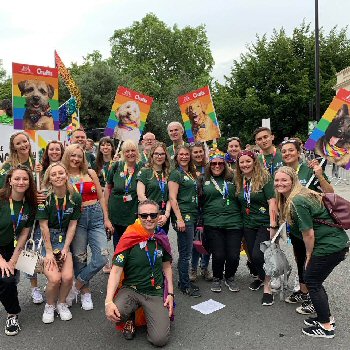
I am writing in relation to David Cavill's Speakers' Corner column in Our Dogs of 27th September 2019 in which he questioned the involvement of Kennel Club staff in the Pride in London parade in July.
This event has at it's heart the celebration of inclusion, diversity and equality, which are seen by Kennel Club management as powerful values to underpin the organisation's commitment to being a welcoming, non-judgemental organisation for dog owners and staff.
The management feels it is quite reasonable that our organisation should have a presence at Pride in London, especially as our headquarters are located in this great city, and I am especially proud that my colleagues took part alongside other animal welfare organisations such as the British Veterinary Association, Dogs Trust and Battersea Dogs & Cats Home, among others,
As far as costs are concerned, as a not-for-profit organisation the Kennel Club paid a £50 registration fee and all members of staff. Their partners, family members and friends were there purely in a voluntary capacity. Each of them reported back on what a positive and welcoming event it was and how delighted the huge crowds were to see the Kennel Club joining in the celebration.
I can confirm that it was a management decision to take part in Pride in London this year, a decision I am very proud to have endorsed and would happily do so again in future years.

After 21 years of working for the Kennel Club, for most of her time as Kennel Club Secretary, Caroline Kisko has decided to move on to pursue other interests. Caroline has contributed significantly during her time at the Kennel Club in her role as official spokesperson as well as leading our Health and Welfare programmes and our welfare lobbying activities. Her last day at the Kennel Club was Friday 30th August 2019.
The Kennel Club would like to thank Caroline for her service and wishes her well for the future.
The Board has appointed Kathryn Mansfield as Kennel Club Secretary, combining with her current responsibilities within Governance and Education.
Kathryn joined the Kennel Club in 1976 and has worked across a number of areas including the Shows Department, Canine Events and Awards, Canine Activities, Assistant Secretary, KCAI and Good Citizen Dog Scheme.
The Kennel Club wishes to announce that the regulations regarding event licences across all disciplines are to be changed.
With immediate effect from 1 July 2019, event licence applications, whether for a show, trial or other competition, will cease to refer to 'guarantors.' Instead, whenever a licence fee is paid for an event, the individual making the application on behalf of the club or society will agree that the officers and committee in place at the time of the event will assume full responsibility for ensuring that it will be conducted safely and in accordance with Kennel Club regulations.
Caroline Kisko, Kennel Club Secretary, said, 'This change in regulations has come about due to the Kennel Club's implementation of the Customer Relationship Management (CRM) database which will provide facilities for licence applications to be made online and which will remove any necessity for signatures to be provided. The principle of the licensing process will remain unchanged, but the term ‘guarantor' will no longer be used.'
The relevant regulation changes across all disciplines will be published in due course.
Any enquiries regarding this matter can be directed to email wda@thekennelclub.org.uk.

The Kennel Club Board has voted to elect Tony Allcock MBE as Kennel Club Chairman with Dr Ian Gabriel appointed as Kennel Club Vice-Chairman. The previous Chairman, Steve Croxford, was thanked by the Board for his valuable contribution as Chairman since November 2018 and as Vice Chairman since 2015.
Tony Allcock MBE has been a member of the Kennel Club since 2002. He was elected to the Board in 2015 and became Vice Chairman in November 2018. He has bred, owned and exhibited over 25 UK Champion dogs in several Toy breeds under his Sleepyhollow kennel name. In his professional life, he is Chief Executive of Bowls England, the National Governing Body for Outdoor Bowls. In Queen's Birthday Honours List 2019 Tony Allcock, has been awarded an OBE infor Services to the Sport of Bowls (Administration). He has been the Chief Executive of English Bowls since 2003, serving a membership currently standing at 110,000. He successfully implemented a national modernisation programme, resulting in uniting the sport by gender and the joining together of two long-established national sporting associations, incorporating them into Bowls England Limited to better serve the needs of the sport. In January 1989, he was awarded an MBE in January 1989 for achievements whilst playing the sport. During his sporting career he was World Champion 15 times.
Dr. Ian Gabriel has been a member of the Kennel Club since 1999 and has been on the Board since 2013. Ian is the third generation of his family involved in dogs with sole interest in Gaybryl Smooth Fox Terriers with many notable wins. Ian has judged for over 25 years, and is approved to award CCs in four terrier breeds including Smooth and Wire Fox Terriers. In his professional life Dr Ian Gabriel is a consultant haematologist, specialising in blood cancers and bone marrow transplantation (BMT) and is the lead for haematological cancer at Chelsea and Westminster Hospital, London. He has a strong interest in transplant directed therapy for HIV associated cancers and in HIV eradication strategies and is a member of the group, which demonstrated effective transplantation in HIV patients and more recently lead and coordinated the group achieving cure of HIV with transplantation.

The Board of the Kennel Club Limited has elected Steve Croxford as Chairman and Tony Allcock MBE as Vice Chairman at it's meeting today and wishes them every success in these positions.
With the deepest regret the Board announces the resignations of Simon Luxmoore and Mark Cocozza from their positions as Directors of the Kennel Club. Both directors announced their resignations as they felt this would be in the best interests of the Kennel Club. The extensive contribution of the two directors in all their roles over the years is fully recognised and appreciated by the Board.
The Board wishes to make clear its continued endorsement and support of Jeff Horswell as a Director of the Kennel Club and of Mark Cocozza as a member of the Finance Committee.
Following the discussion at the Special General Meeting, the Board wishes to confirm that it will be reviewing aspects of the Judges Competency Framework. A number of other issues were discussed at the SGM which the Board will be giving due consideration.
The eagerly awaited agility regulation changes, which will see significant changes to grade progression and jump heights over the next few years, have been announced by the Kennel Club in response to the findings of consultations with the agility community over the last three years.
A number of changes to the ‘H' Regulations for Agility have been approved which are being made in order to address issues that the Agility Liaison Council has identified and considered during its current term of office.
Three Panels, set up by the Agility Liaison Council, have over the last three years considered a number of separate issues which are important to the agility community, and have made recommendations for changes to the ‘H' Regulations based on their findings.
The Equipment Panel
The Equipment Panel considered various elements of the obstacles that dogs are currently required to negotiate. From its recommendations, the Board approved the following regulation changes:-
The regulation change below has been made to reflect the fact that pipe tunnels are manufactured and sold in metric sizes. Additionally, the revised regulation clarifies that only a single curve is permissible in the configuration of the tunnel in a test.
Amendment to Regulation H(1)(B)4.(11)
TO:
Pipe Tunnel—This obstacle should have a diameter of a minimum of
609mm (2ft) 600mm (1ft 11.6ins)600mm and should be a minimumof 3.048m (10ft)3m(9ft 10.1ins)in length. The tunnel may only curve in a single direction. (Deletions struck through. Insertions in yellow - effective 1 January 2019.
The below regulation has been made in order to align the height of the dog walk with international competitions.
Amendment to Regulation H(1)(B)3.n
TO:
Dog Walk—A walk plank of approximately
1.372m1.2m measured from the ground to the top of the plank, with firmly fixed ramps at either end.(Deletion struck through. Insertion in yellow- effective 1 January 2019.
The Use of Whistles
It had been proposed that a regulation be introduced to exclude the use of whistles in Standard classes. The introduction of this regulation was not recommended for approval, as it was felt that there are sufficient processes in place to request judges not to use whistles. Shows wishing to restrict the use of whistles at their show could indicate this in the judge's contract.
The Grading Panel
The Grading Panel considered the issue of quick progression through the grades which has resulted in minimal entries in the lower grades, with extremely high numbers of entries in the higher grades.
Following its research, the Grading Panel recommended regulation changes that would serve to slow progression. These changes are explained below.
‘Protected' Grades
Up until now, any experienced handler bringing out a new dog would need to start competing with that dog in Grade 3, due to there being two ‘protected' grades (Grades 1 & 2) for new handlers.
It was felt that due to the low numbers of competitors in Grades 1 and 2, there was no necessity to continue to offer two protected grades. Therefore, from 1 January 2019 experienced handlers with new dogs will enter Grade 2, while new handlers and dogs would continue to enter at Grade 1.
Scheduling of Progression Classes
Currently, shows are able to schedule as many progression classes for each grade as they wish, giving dogs multiple opportunities to win out.
The new regulations will provide for shows to schedule a maximum of four standard classes for any dog on an individual day of competition. This will reduce the opportunities available for any one dog to win out at a show, thereby slowing down progression.
Scheduling of Graded Classes
In the regulations as they currently stand, a show may schedule a Graded class for any number of grades, which allows for, at its most extreme, a Graded 1-7 class. This allows up to seven dogs to win out of their grade from this one class, in a test which may not be grade appropriate for some of the dogs entered.
In order to combat this, the regulation has been amended to restrict the number of grades in a Graded class to a maximum of three. This will reduce the number of dogs that can win out from one class, and will therefore slow progression.
However, a show may still schedule combined classes that include as many grades as required.
Progression criteria
In addition to changing the scheduling of classes to tackle progression, the regulations have also been amended to increase the amount of wins or points needed to progress.
Currently, dogs can progress up to Grade 4 with wins or points from jumping classes only. Under the new progression criteria, dogs will be required to have wins in agility classes as well. The number of wins required to progress has been increased for each grade, including Championship eligibility. Progression from points will require at least 50 points from agility classes.
Height Classification Panel
The Height Classification Panel considered the jump heights that dogs are currently expected to negotiate in a test. It looked at whether any changes were needed to protect the welfare of dogs, while also considering the practicality of scheduling multiple heights at a show.
Currently, dogs jump at 65cm, 45cm or 35cm at full height or 55cm, 35cm or 25cm at lower height, depending on what height they have been measured in to. The Lower Height Option was introduced in order to allow owners to compete at a height they felt was appropriate for their dog.
As of 1 January 2020, jump heights will be changing and an extra height will be introduced.
The changes that have been approved will see the jump heights being lowered to 60cm for Large dogs, 40cm for Medium dogs and 30cm for Small dogs. A new height of Intermediate is also being introduced which will be 50cm.
The Lower Height Option will no longer be available, and therefore all dogs must jump one of the four measured heights.
While many members of the agility community may have wished for this change to take effect from 1 January 2019, it was considered necessary to defer the implementation of the new height regulations until 2020.
This ensures that as soon as shows are able to start scheduling Intermediate classes, there will be dogs able to compete in them. As one of the aims of the current changes to agility is to slow down progression through the grades, it was felt that it would not be prudent to introduce a new height that would have small class entries to begin with.
How does this affect your dog?
Any owners/handlers who wish to run their dog in the Intermediate height will be required to get their dog measured to determine if it falls in to the new height category. Measurements may be undertaken in 2019 and any dog measured into Intermediate during 2019 may continue to compete in Large until 1 January 2020.
If any dog competes in Large from 1 January 2020, it will not have the option to be measured into Intermediate in the future.
New dogs competing from 1 January 2020 will be required to undergo the measurement process to determine in what height to compete.
The Lower Height Option will remain available until 1 January 2020.
Full details of the regulation changes and FAQs are available on the Kennel Club website
Simon Luxmoore, Chairman of the Kennel Club, has resigned from his post. Until the Board confirms interim arrangements, Steve Croxford will assume Mr Luxmoore's responsibilities with immediate effect,
In addition, Mark Cocozza has resigned from his role as Chairman of the Kennel Club Disciplinary Committee and will continue as Chairman of the Kennel Club Finance Committee, and Jeff Horswell has resigned as Chairman of the Kennel Club Judges' Competency Framework Working Party. The Committees will elect Chairmen to these Committees in due course.
These actions (the resignations) have been taken reluctantly and with deep regret by Simon Luxmoore, Mark Cocozza and Jeff Horswell in the hope of bringing an end or, at least, minimising the damage being done to the Kennel Club - an organisation they hold dear and to which they have given unstinting and dedicated service - by media coverage of these matters, which were intended to be managed within a fair and even handed SGM process.
Mr Luxmoore, Mr Cocozza and Mr Horswell will remain on the Kennel Club Board. Further details will be announced in due course.
The guidelines below were issued by the Activities Sub-committee when many shows were cancelled due to wet weather. They mean that it can be better for show organisers to cancel a show completely before it starts, so they can take out any costs and refund the balance pro rata through the entry processors. If just one day is cancelled, the proceeds from the whole show must be used to refund for the cancelled day. If just one day of a show is run, it is better for them financially not to cancel other days whatever the conditions. Show organisors that have not followed these guidelines have had show licenses refused until they have complied.
With the increasing frequency of show/trial cancellations due to inclement weather, societies are requested to state in their schedule their policy in the eventuality of the show/trial having to be cancelled for reasons beyond their control. Societies are advised that making a profit from a cancelled show/trial is not an option under any circumstances. Events that are held for longer than a day such as a weekend or week at the same venue, will be defined as one show/trial whether separate licences have been issued for each day/event taking place or not. Any society that has cancelled its event must contact the Working Dog Activities Department at the Kennel Club as soon as the decision to cancel has been made. Contact can be made via email; canine.activities@thekennelclub.org.uk or 01296 318540 (ext. 207 or 226). Where possible and appropriate advice will be provided and the licence fee will be reimbursed if the cancellation is considered to have been beyond the society's control. Copies of the proforma document, “Specimen Balance Sheet” are available to download from the Kennel Club website under 'Show Administration.'
1. All societies must include their refund policy within the schedule – ‘no refunds will be given' is not acceptable, a suggested wording is:- ‘In the event that the show/trial is cancelled due to unforeseen circumstances, the society will refund fees, less reasonably incurred expenses. If the show processor has the provisions to do so, competitors will be refunded in the manner in which they had entered the show/trial, but in any event the society will refund fees within three months of the show/trial date to all those who had entered and requested a refund within 1 month of the show/trial date..'
2. When booking services or venues, clubs should establish what the cancellation policy is for any orders placed or venue bookings made. As a priority, clubs should endeavour to negotiate at an early stage a favourable deal on all services and venues which could be cancelled for reasons beyond their control. This should enable them to avoid paying the full cost for services/venues contracted but not used. A hire contract should be in writing and should set out the rights and liabilities of both parties to the contract in the event of cancellation due to for the intervention of circumstances unforeseen by the parties and outside the parties' control.
3. Clubs should try to avoid purchasing non-reusable products too early e.g. catering items and try to source these items as much as possible from companies that have a full credit returns policy. WT81/CAT Version 1 November 2016
4. In the event of a show/trial being cancelled it is of paramount importance that competitors/creditors of the event are informed as soon as possible. Furthermore, they should be kept informed on an on-going and regular basis about the financial implications that affect them and how to apply for a refund. Initial information should be available no later than 7 days after the decision to cancel the show is made. It is paramount that, wherever possible, the refund policy is met to the satisfaction of all parties concerned.
5. In the event of a cancellation, a full set of the licensing club's detailed accounts for the show/trial must be submitted, using the proforma document, to the Kennel Club within 3 months of the decision to cancel the event, along with a copy of the club's refund policy and the date that action was taken on this policy. All fees payable to the club in respect of the running of the show/trial e.g. camping fees, etc. must be included in the calculation of refunds. If all entry fees are refunded in full, detailed accounts are not required, but confirmation and evidence of the refund is required in writing. The covering letter must contain a full explanation of the reasons for the cancellation and the processes used to calculate the money available for refund. Societies should note that if suitable refunds are not provided this may result in future licences being jeopardised.
6. The distribution of any profit surplus, once refunds have been provided, must also be clarified. Entry forms are to include an optional tick box for competitors, a suggested wording is:- ‘In event of cancellation I wish to donate my entry fees to the Club or at the Club's discretion to a charity chosen by the Club'.
7. Events cannot be postponed to a later date. If the club still wishes to reschedule the event, a new licence or licences must be obtained with a new schedule, judges' contracts, entries etc. (ASC September 2013)
WT81/CAT Version 1 November 2016
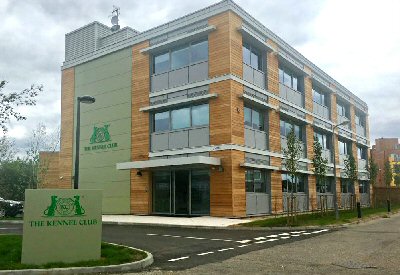
The Kennel Club has opened its new offices in Aylesbury, having moved a matter of yards away from its previous home in the Alton House Office Park in Gatehouse Way.
The Kennel Club moved its core operational activities to Aylesbury from its headquarters in London in the summer of 1999, namely the registration, Petlog and call centre services. In the original move, five members of the London team relocated to Aylesbury, while other members of staff were recruited locally. Alton House was originally obtained on a ten-year lease which was then renewed in 2009.
The new Aylesbury address is known as Kennel Club House and its purchase was made possible through the £12m payment that the Kennel Club received when it struck a deal with British Land in 2013 to move it's London headquarters further up Clarges Street in Mayfair. The money also enabled the Kennel Club to purchase it's recently-opened Emblehope and Burngrange Estate in Northumberland which it aims to develop as a centre of excellence for working dogs.
The Aylesbury office handles high volume activities on behalf of the Club, with the monthly average equating to 48,000 telephone calls, 20,000 puppy registrations, 14,000 transfer applications and 70,000 microchip recordings.
Caroline Kisko, Kennel Club Secretary, said: 'It is strange to think that the Kennel Club has had premises in Aylesbury for 18 years as, for some of us, it seems like only yesterday that the original building in Alton House Office Park was opened. We are very pleased that the move into the new Kennel Club offices went very smoothly – in fact there was no down time to any single service during the transitioning of both service and staff to the new building.'
The new address for the Kennel Club offices in Aylesbury is Kennel Club House, Gatehouse Way, Aylesbury, Buckinghamshire HP19 8DB. The telephone number remains the same – 01296 318540.
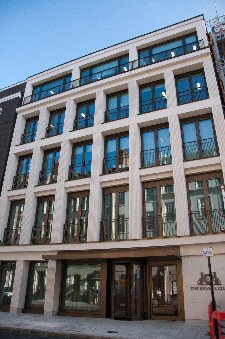
After moving in to a brand new building last November, the Kennel Club is now opening its doors to the public and offering free tours of the London headquarters situated on Clarges Street, Mayfair.
Visitors will have the opportunity to learn more about the history of the organisation, and the Kennel Club's efforts to improve the health and welfare of dogs in the UK. During the tour staff will explain how the Kennel Club is an unparalleled source of information on dog welfare, training and breeding.
Highlights of the tour include the unique opportunity to see the world famous Keddell Memorial Trophy up close; a visit to the world's biggest canine library; a rare chance to view Sir Edwin Landseer's ‘A Distinguished Member of the Humane Society', currently on loan from the Tate; and a chance to explore the Gallery's current exhibition, The Labrador Retriever in Art.
Refreshments will be served upon arrival and each visitor will receive a Kennel Club goody bag when they leave. For a small charge, guests can prolong their visit with a lunch prepared by the catering team.
There will be two public tours a month with each one beginning at 11am. Places are limited so visitors wishing to join a tour must book in advance via phone or email.
Dates confirmed for 2016 can be found on the website thekennelclub.org.uk/our-resources/the-art-gallery/tours-of-the-kennel-club/. Private tours for ten people or more can also be booked for a small fee.
The Kennel Club General Committee have voted to elect Simon Luxmoore as Kennel Club Chairman and agility's own Steve Croxford as Kennel Club Vice-Chairman, replacing Steve Dean and Mike Townsend respectively.
The Young Kennel Club has launched a new
website and there is now a sign up on the homepage. If you would like to to
receive the YKC ENews, please can you register your name and email address
online.

Does your club want to have a bigger say in how dog agility is run? Does it want to contribute more to promoting the general improvement of dogs? Does it want to see its ideas acted upon? Does it want to become part of the solution to issues in the dog world? Your Club should then consider nominating a Representative to one of the Kennel Club Liaison Councils.
The Kennel Club Liaison Councils play an important role in formulating Kennel Club policy and enhancing the Kennel Club's strategic objectives across every canine activity.
Representatives should be actively involved within their discipline by way of competing, judging, organising and / or officiating at shows / trials and events.
Your club's elected representative to a Council will be responsible for representing the views of your region, breed or activity and for putting forward proposals on your club's behalf to enhance the future of your hobby. It's a responsible position and the Representative's responsibility will be to regularly canvas your club and others in your area or breed to gather views and ideas, research their viability and then represent them at Council meetings once or twice a year.
Dedicated representatives ensure their constituency's views are brought forward for debate either through regional meetings and/or direct contact with clubs and societies and individuals at events. Representatives should be willing to commit to at least one or two meetings per year, more if they are elected onto a Working Party or Sub-Committee. Council proposals often result in fundamental changes in Kennel Club policy and the Kennel Club values the important work the Councils do and the opportunity to engage directly with those dedicated individuals involved on the hobby on a daily basis.
There are six liaison councils:-
Agility Council
Breeds Council (individual breed representation)
Field Trials Council
Obedience Council
Shows Council (regional representation for societies which hold breed shows)
Working Trials Council
To become a representative on a Council, you must first be nominated by a suitable registered society. All registered societies are encouraged to nominate suitable representatives to make sure that their opinions are heard and that they can make a direct contribution to formulating policy in the future.
Representatives are elected for a period of three years and the current term of office of all Kennel Club Liaison Council representatives ends on 31 December. Therefore, the process for election for the next term of office (January 2016 – December 2018) commences now.
Nominations for election to all Councils must be received by 19 June 2015. Nominations must be signed by an officer of the nominating organisation and submitted to the Canine Activities Department (Council elections), The Kennel Club, 1-5 Clarges Street, London W1J 8AB. Please indicate clearly on the envelope to which Council nominations refer. Alternatively emails can be sent to: elections@thekennelclub.org.uk but these must be on the organisations headed paper and signed by the nominee.
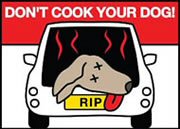
The Kennel Club General Committee has agreed that the 'dogs in hot cars' notice for Kennel Club licensed shows and events be changed to make clear that it encompasses all vehicles.
Caroline Kisko, Kennel Club Secretary, said, 'We want to make it explicitly clear that dogs can overheat in vans and other large vehicles just as they can in cars. Unfortunately shows have struggled to enforce the correct protocol after certain dog owners have attempted to argue that the policy only refers to cars and no other vehicle. The welfare of our dogs must be the main priority at any show, so the wording has been changed from ‘cars' to 'vehicles' to ensure there is no misunderstanding.'
The Kennel Club Specimen Schedules have been updated to reflect the amended policy.
To find out more about the Kennel Club's campaign to raise awareness of the dangers of leaving dogs unattended in vehicles, visit www.thekennelclub.org.uk/dontcookyourdog.
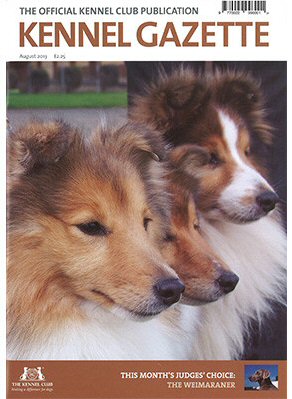
The Kennel Club is bringing back the Kennel Gazette in the near future, and it is hoped that the first issue will be published sometime in spring.
Carrie Tomas has been appointed Editor.
It has been decided that the Gazette will retain some of the previously popular items such as Judges' Choice and it is hoped in future it will feature two breeds to allow increased exposure of vulnerable and less well known breeds. The first two breeds that will be showcased will be the Beagle and the Bracco Italiano. Over the next few weeks the Kennel Club will be contacting judges of these breeds for their choice of dogs.
As part of their 30th anniversary celebrations, the Young Kennel Club (YKC) has set up a competition for a celebratory slogan! Entries can be along the lines of what the YKC does, what it is about, or just a celebration of 30years!
As well as seeing your idea on all the YKC marketing materials in their anniversary year, you will also win a framed piece of artwork featuring the winning work!
To be in with a chance of winning, email your slogan with a subject line 'slogan competition' to ykc@thekennelclub.org.uk by this Friday, 19 December 2014. Good luck!
The Kennel Club and Petlog's phone numbers have changed in order to ensure best value for money for customers. The phone number changes, which are effective from today (20th October), will see the Kennel Club switch to geographical numbers from the existing non-geographical numbers starting with 0844 or 0870.
The change will mean that all customers will only be charged the standard rate for calls, regardless of whether they call from a landline or a mobile. This is different to the current non-geographical numbers, which are charged at a standard rate by the Kennel Club, but which may be subject to additional charges from mobile network providers. The old numbers will remain temporarily in use but customers calling these will hear a recorded message advising that additional charges, beyond the standard rate, may apply and will be given the option to redial using the new numbers.
The new Kennel Club numbers are:-
|
Function |
Old Number |
New Number |
|
Kennel Club Main Number |
0844 463 3980 |
01296 318540 |
|
Petlog Main Number |
0844 463 3999 |
01296 336579 |
|
Petlog Lost & Found (Reunification |
0870 606 6751 |
01296 737600 |
The Kennel Club has issued advice to people using Facebook and other social media platforms to discuss issues concerning Kennel Club-based activities such as breeding, competing with and judging dogs.
The KC is made aware, on a regular basis, of conversations held on public internet forums which sometimes include disparaging comments on dogs bred, one-sided accounts of private disputes, criticism of judging from exhibitors and other judges and, in extreme cases. threats made against individuals. It is unable to directly intervene in the majority of such cases and has issued the following guidance which is intended to provide advice to people who have been the subject of such allegations and criticism, those who have been involved in such discussions, and also to give direction on when the Kennel Club can and cannot intervene.
To those conversing on
social media
This is addressed
to those who think that careless, uninhibited and ill-considered comment and criticism aimed at
judges, dogs and exhibitors on Facebook and other forums is acceptable and that it's impact
will not offend, hurt or deeply distress, alongside damaging people's reputations.
Freedom of expression and opinion is, of course, a right of all – but that should be in the context of normal and civil behaviour. In other words, if you have something worthwhile to say, then it should be said in a spirit of constructive criticism and not in an offensive manner.
Judges should take great care in joining in such conversations since it is not acceptable for judges to criticise fellow judges' decisions in a disparaging way. Judges should keep a distance from contentious issues and maintain an independent and private view. This is a matter of perception, public confidence and general respect for those involved in any breed at a senior level. Judges should certainly not give indications about preferences and intentions on placing for a forthcoming appointment.
Anyone judging at Kennel Club licensed events is warned that in certain circumstances the Kennel Club will refer inappropriate content to the Judges Sub-Committee for a review of status and future appointments.
To those reading social media content...
Anyone who finds him or
herself targeted or the subject of such conversations is advised to ignore such material and
not to read, respond or engage in the conversation. The law is intended to offer protection
from the more extreme material. Try to put the matter into perspective. Everyone's reality is
subjective and most of the material is a matter of opinion, on occasions an expression of
anger, and is often not based on verified fact. Rude, spiteful and ill-informed comments say
more about those writing them than about those who they seek to criticise.
In extreme cases of direct threat or harassment, then the police should be contacted.
The Crown Prosecution Service recently issued guidelines on prosecuting cases involving communications sent by social media and these can be found at their web site. These guidelines take the approach that there must be something more than 'the expression of unpopular opinion about serious or trivial matters, banter or humour even if distasteful to some or painful to those subjected to it' before intervention is possible.
The Kennel Club has to apply a similar approach and policy and is, therefore, unable to intervene in the majority of cases.
It remains our advice that it is better not to read, engage or respond to this sort of material. Sometimes it is better to allow those who choose to air views on these channels the freedom to do so, even if they do not do so in an adult and mature fashion. Those who wish to read such postings should treat such content - particularly if critical - with caution and not make any judgment or assume the truth or foundation on the basis of what is being written. Social media content should generally be treated as gossip and not a validated and reliable source of information.
Ultimately if you feel you have to join in, be informed and be polite. If you have to read the content, do not assume what is said is true and, if you are the subject of gossip or rumour, then treat it for what it is. And remember that the most effective and practical way to deal with offending material is not to join in or respond.
A few general guidelines that all social media users should follow are included below:-
You are responsible for
what you post since it is a public medium.
Maintain privacy:
Do not post confidential information. Do not
discuss a situation involving named or pictured individuals without their permission.
Does it pass the publicity test?
If the content of your message
would not be acceptable for face to face conversation, over the phone or in any other medium,
then it is not acceptable for a social networking site.
Think before you post:
If you feel angry or passionate about a subject, it is wise to delay posting until you are
calm and clear headed. There is no such thing as a ‘private' social media site, even if you
delete a post.
Be aware of liability: You are responsible for what you post on your own site and on the sites of others. Individual bloggers could be held liable for commentary deemed to be libellous, obscene or which infringes copyright.
What the Kennel Club can and cannot do...
The Kennel
Club's jurisdiction lies primarily with the enforcement of it's Regulations and issues arising
out of registrations and incidents at licensed events. It does not have any remit or authority
to censor material on the internet or to censure those involved and is, therefore, unable to
intervene directly in the majority of cases.
However, there are ways to deal with the extreme versions of offending material online, including complaints for defamation or harassment or sending malicious correspondence. These are criminal or civil offences and forum moderators are usually (or should be) quick to respond and remove content that has no place being published. Extreme cases of threat or bullying should be reported to the legal authorities and to the Kennel Club for consideration and advice.
Kennel Club Assured Breeders will receive a discount on the cost of registering their puppies in appreciation of their loyalty for a scheme that promotes and encourages responsible breeding and puppy buying. The Members of the Kennel Club voted for a decrease in the fees for Kennel Club Assured Breeders, from £15 to £14, at the Annual General Meeting held today (14 May 2014).
The approved motion also proposed that there will be a £1 increase in the fee to register puppies outside of the Assured Breeder Scheme from £15 to £16, to cover the increased costs in postage and administration.
Caroline Kisko, Kennel Club Secretary, said, 'The Kennel Club Assured Breeder Scheme is central to the Kennel Club's objective of improving the standard of breeding and helping puppy buyers to more easily identify and find those breeders.
'We thank members of the scheme for their continued loyalty and support and the decrease in the cost of registering a puppy is just one of the many incentives that we offer them. We hope that more and more responsible breeders will unite under the scheme's banner.'
The Members of the Kennel Club voted for the reinstatement of the Kennel Gazette, which was replaced by the Kennel Club Journal at the beginning of the year. The General Committee will discuss the future direction of a revived Kennel Gazette at it next meeting.
The Members approved a decision to amend the fees for heelwork to music show licences, since the discipline was granted listed status in April 2014, so that the fees are in line with other listed status shows for agility and rally. A licence for a Premier Heelwork to Music show will cost £45, whilst licences for Open shows will cost £35 for registered societies and £60 for listed status organisations.
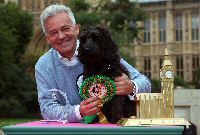
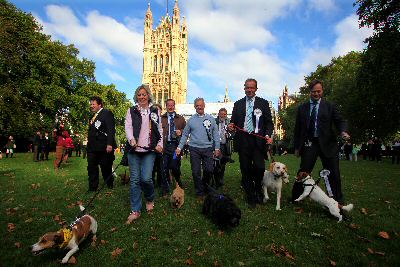
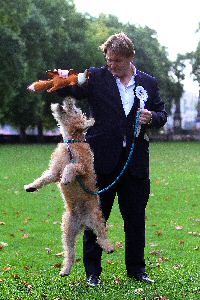
There was a worthy winner in Westminster as Noodle, an 11 month old Cocker Spaniel/Poodle cross, belonging to Alan Duncan MP for Rutland and Melton, triumphed in the 21st annual Westminster Dog of the Year competition. .
The competition, organised by the Kennel Club and Dogs Trust, took place on Thursday 10 October 2013, in Victoria Tower Gardens, Westminster. Noodle showed dogged determination as she battled it out to defeat 13 paw-litical opponents to be crowned Westminster Dog of the Year.
The MPs entering the competition campaigned hard, canvassing for votes from the public before meeting the expert judges to boast about their dog's heroic deeds and acts of devotion. For the first time, the competition had a winner decided solely from this fought for public vote which was Brodie, an Irish Wheaten Terrier owned by MP for Falkirk, Eric Joyce.
MP, Alan Duncan, said of his Westminster Dog of the Year champion: 'I am absolutely thrilled to bits to have won Westminster Dog of the Year. Noodle is a playful and well behaved dog which caught the judges eye and I am very proud of her. I really like this competition as it highlights the importance of responsible dog ownership.'
The judging panel - Clarissa Baldwin, CEO of Dogs Trust, Caroline Kisko, Kennel Club Secretary, and MP Charlie Elphicke, owner of 2012's winning dog Star, spent the morning with dogs from different political persuasions and ambitions.
Commenting on the reasons Noodle was selected as the 2013 Westminster Dog of the Year, Caroline Kisko, Kennel Club Secretary says: 'Again this year we have seen lots of worthy dogs compete for this title and the bond each MP has with their dog is uniquely special. It was a difficult decision to make but Noodle and Alan struck a chord with us all and are clearly popular with their constituents too. Well done to Noodle, you truly deserve the title of Westminster Dog of the Year.'
Clarissa Baldwin, CEO of Dogs Trust continued: 'It is fantastic to see so many wonderful dogs in attendance with their devoted owners. It seems to get harder every year to pick the winner. I loved Alan's answer to the question, what Noodle would do if she were Prime Minister? His answer was that she would allow a dog to be a winner of the Nobel Peace Prize.'
Leading the opposition in second place was Harry, a Fox Terrier owned by MP for Dewsbury, Simon Reevell, with third place awarded to Cholmeley, a Labrador owned by MP for Enfield Southgate, David Burrowes.
The Kennel Club
is to introduce an online agility newsletter to be called The Scribe which will
be issued quarterly via email to anyone who has registered agility as an interest on their
Kennel Club website profile page.
The newsletter
is designed with the aim of providing the latest information about the sport, highlighting
forthcoming Kennel Club agility events and answering frequently asked questions whilst
presenting the fun side of agility. The Scribe will include all new regulation changes as they
happen, alongside helpful explanations of some of the more complicated rules and regulations
for the benefit of competitors.
The first issue will highlight some of the exciting agility action taking place this summer. There will be an exclusive interview with Team GB Manager, Mark Laker, as well as information about the Kennel Club International Agility Festival taking place this August at Rockingham Castle, Leicestershire. There will also be reminders from the Activities Sub-Committee and clarification of how the Agility Liaison Council makes decisions.
The Kennel Club
wants to encourage those involved in agility to let us know what they would like to see
featured in future editions. Suggestions should be emailed to
cat@thekennelclub.org.uk.
To make sure
you don't miss out on receiving future editions, create your online profile today via
https://secure.thekennelclub.org.uk/cgi-bin/register.cgi?page=0 and register agility as an
interest.
The Kennel Club would like to remind show organisers who use grass areas for parking, to check their fire risk assessments.
Under normal running conditions, any motor vehicle exhaust can become hot enough to start a fire in very dry grass and show organisers should ensure that their risk assessments fully cover this potential hazard.
Steps that may be taken to lower the risk of grass fires include:
The Kennel Club has recently considered the issue of distance handling in agility as a result of having received requests for a competition to be scheduled at Crufts specifically for competitors who have difficulty in running an agility course.
In response to the requests, the Crufts Committee has considered this issue accordingly. However, the Committee agreed that as it is permissible for any competitor who has difficulty in running the course to handle from a distance in any of the existing agility competitions, a separate event was not required at this time.
Dog-loving children and their four legged best friends are coming to Melton Mowbray for a week of tail wagging action at the Young Kennel Club (YKC) Summer Camp.
More than 80 children, aged from 6 - 15 years old, will be training with their dogs in handling, agility, flyball, the Good Citizen Dog Training Scheme and heelwork to music, made famous by Britain's Got Talent winners Ashleigh and Pudsey. Brooksby College will be transformed for a week as the young dog lovers take over, having fun whilst learning skills with their dogs and keeping them both healthy and active.
Victoria Gleave from Leicester is returning to the YKC Summer Camp after a successful experience last year. Victoria and her dog Tommy, who has his own blog, are already quite experienced in agility and will be using their time at camp to take lessons from the experts and to perfect their skills.
Victoria said: 'I love my dog Tommy - he is very funny and great at agility. I am really looking forward to the agility and Kennel Club Good Citizen Dog Scheme training, but also to seeing all of my friends and take part in all of the evening activities.'
Camp is a great way for children to keep active, have fun, make new friends and take part in a wide range of dog training and social events. The programme is packed with a range of activities and evening entertainment that will keep youngsters busy from morning till night. A typical day at the camp includes four one-hour training sessions for the children and their dogs and a selection of team time activities, with some days also including a workshop or masterclass from dog experts. Evening activities include games nights, discos, talent shows and many outdoor events.
Gerald King, Chairman of the Young Kennel Club said, 'The annual camp is an important event in the development of young people. Not only is it run by senior YKC members as part of their development, it encourages attendees to try different canine activities. The key is to enable everyone to work as a team and develop their skills.'
Parents, trainers and members return year after year for a summer holiday with a difference and agree that nothing can match the enthusiasm and innovation of YKC camp.
This year's camp is taking place from 27 July to 2 August at Brooksby College, Melton Mowbray, Leicestershire. All places at YKC Summer Camp are booked but if you are interested in attending one of the popular YKC Activity Weekends visit www.ykc.org.uk and find out about becoming a member.
The Kennel Club
Activities Health and Welfare Sub Group has recently developed and designed a questionnaire
with the aim to investigate the occurrence, frequency and types of injury which occur in dogs
that take part in Agility.
The
questionnaire is not restricted to dogs taking part in Kennel Club licensed events; owners /
handlers who participate in 'unaffiliated' events or events run under regulations set by other
bodies running Agility competitions are also encouraged to participate in the survey.
If you wish to
fill in a survey or know anyone who would be interested in this please go to the following link
This questionnaire is also available in a paper copy. Please note that all questionnaires need to be returned no later than the 10th of May 2013.
If you have any further questions or wish to discuss this further please contact: James Oxley at James.Oxley@thekennelclub.org.uk or ring 0844 463 3980 ext. 207
Following the introduction of the Code of Conduct for Licensed Events in August 2011, the Kennel Club has announced that it is to support the code with a formal regulation.
This new regulation is being introduced in order to be able to enforce the code of conduct more effectively and address complaints received about conduct at licensed events.
It is envisaged that the conduct regulation will be an effective measure to use for objections which require some attention and sanction, but which fall short of requiring the Rule A11 (formerly known as A42) inquiry and process.
Therefore, the Kennel Club has introduced a Code of Conduct Regulation for all disciplines and has amended the relevant Penalty Regulations accordingly. The new regulations, which are effective immediately, are as follows:
Code of Conduct Regulation
F3, G3, H2, I3, L3, R3
Those taking part in Kennel Club licensed/approved events are expected to maintain and abide by the highest standards, in accordance with Kennel Club Rules and Regulations and appropriate Codes of Conduct as published from time to time.
Field Trial Regulation J9b.(13) remains as previously published.
Penalty Regulation
From
Fines.
The General Committee shall have power to fine any person for breaches of Kennel Club regulations subject to a right of appeal notice of intention of which must be lodged within 14 days from the date on which the decision is given and subject to the prescribed appeals process as shall be determined by the General Committee from time to time. In the event of such fines not being paid within the time stipulated by the General Committee, that person may, at the discretion of the General Committee, be dealt with as if a complaint under Kennel Cub Rule A11 has been lodged and proved to the satisfaction of the General Committee.
To
F(1)34 , G39, H28, I18, J15, L28, R11
Penalties
The
General Committee shall have power to impose any of the following penalties upon any person for
any breach of Kennel Club Regulations subject to a right of appeal, notice of intention of
which must be lodged within 14 days from the date on which the decision is given and subject to
the prescribed appeals process as shall be determined by the General Committee from time to
time.
Warn
Censure/Reprimand
Apology directive (Conduct Regulation or the Control of Dog Regulation)
Fine
Award disqualified
A dog's registration record may be marked ‘incident recorded'
A dog's registration record may be endorsed ‘not eligible for entry in any event held under Kennel Club Rules and Regulations, nor any unlicensed event recognised by the Kennel Club.'
In the event of any fine not being paid, or non compliance with any apology directive issued within the time stipulated by the General Committee, then that person may, at the discretion of the General Committee, be dealt with as if a complaint under Kennel Club Rule A11 had been lodged and proved to the satisfaction of the General Committee.
 The
Kennel Club would like to point out that in the recently published Agility regulation booklet,
the definition for the Grade 5 (Intermediate) class should read as follows:-
The
Kennel Club would like to point out that in the recently published Agility regulation booklet,
the definition for the Grade 5 (Intermediate) class should read as follows:-
Regulation H(1)(A).8.e:
Grade 5 (Intermediate)
Open to dogs which have gained a first place in an Agility Class or three first places in Jumping Classes at Grade 4 at Kennel Club licensed Agility Shows and are not eligible for Grade 3, 4, 6 or 7.
The free downloadable copy on the Kennel Club website has been amended and can be found at www.thekennelclub.org.uk/item/2901. An errata will be included in all printed versions, which are available as a handy A5 printed booklet for just £1.50 from the Kennel Club online shop.
 Following
a number of queries on the issue, the Kennel Club has confirmed that it is permissible to send
judging contracts via email across all Kennel Club licenced events, including agility shows and
trials.
Following
a number of queries on the issue, the Kennel Club has confirmed that it is permissible to send
judging contracts via email across all Kennel Club licenced events, including agility shows and
trials.
In terms of the signatures required to offer the invitation and in accepting the appointment, the following methods are accepted:-
Scanned manuscript signatures
The judge's indication of acceptance by including ‘I accept the terms of the contract' or ‘I am able to judge at your show and I accept the terms of the contract' (or something similar) and a typewritten name or initials in an email.
Breed Shows Only
In
respect of breed shows, the Kennel Club would remind clubs and societies that, when issuing
judging contracts, it is recommended that they stipulate the number of classes to be judged,
and include an allotted space for the judge to confirm any breed club judges' list they are
included on and their position on it e.g. A3, B, C etc. It is hoped that in doing so it will
prevent judges carrying out appointments which they are ineligible to accept.
As outlined in Regulation F(1)21 - For Open shows and non CC breeds at Championship shows scheduling more than three breed classes (five classes for Stud Book Band E breeds), the selected judge must, when appointed by the club/society, either:
Have previously been approved to award Challenge Certificates to the relevant breed, and not have been declared ineligible to do so by the time of carrying out the appointment, or
Be included on a Breed Council/Club B Judges list or above.
Requirements for judges resident in Northern Ireland or overseas are detailed further in this regulation.
A number of changes have been made to the agility regulations with effect from 1st January 2013, including Listed Status for agility and the introduction of Premier Shows.
To assist competitors and show organisers with these changes, a new regulations booklet including all updated agility and flyball regulations will be issued on 2nd January 2013. These cost just £1.50 for a handy A5 printed booklet and are available from the Kennel Club shop. A downloadable copy will be available from www.thekennelclub.org.uk/item/2901.
In addition to the changes previously announced, the Kennel Club has also extended the current submission deadline for societies nominating potential first time Championship agility judges to 18 months, from 1st January 2013. This will ensure there is a longer timeframe to arrange suitable assessments and to provide for second assessments if necessary. Societies can apply earlier than this if they wish, but must now apply at least 18 months in advance of the show.
The timeframe for previously approved Championship agility judges remains at nine months.
Regulation H18.a (Approval of Judges)
FROM
All first time appointments must be applied for a minimum of twelve months before the day of the Show on the form provided. (Deletion underlined)TO
All first time appointments must be applied for a minimum of 18 months before the day of the Show on the form provided.(Amendment underlined)
There has been some confusion regarding whether a judge could officiate over 450 total runs or 450 different dogs. With effect from 1st January 2013, Regulation H(1)9.e. has been amended to clarify this.
FROM
The maximum number of dogs a person may judge on one day is 450…(Deletions underlined)TO
The maximum number of individual runs a person shall judge on one day is 450, excluding unforeseen eventualities such as re-runs…(Amendments underlined)
 Clevedon
Agility Show Society is the first club to achieve 'Listed Status' for agility.
Father and daughter, Mike and Claire Bacon are now able to hold licensed KC
Agility shows as part of the new Kennel Club Listed Status initiative.
Clevedon
Agility Show Society is the first club to achieve 'Listed Status' for agility.
Father and daughter, Mike and Claire Bacon are now able to hold licensed KC
Agility shows as part of the new Kennel Club Listed Status initiative.
With a combined experience of over 45 years working as dog training instructors, Mike and Claire are both passionate about agility. Mike is an Agility Club Approved instructor (ACAI) and a member of the Kennel Club Accredited Instructor Scheme (KCAI) Claire specialises in agility competition, training, competing at Grade 7 and Championship agility level.
Mike said: 'We are very excited about being the first Listed Status agility society for agility shows. It will allow us to run limited and open agility shows under the Kennel Club umbrella but not have the full committee of a registered club, which means we can make quick decisions and organise shows in a short timeframe.
'Our first show is a limited show for Large dogs on 16 March at Hand Equestrian Centre - a top class venue. Under the new rules we can have three standard classes so all grades will have at least one standard class and two special classes. While it will be a proper show in its own right, we also see it as a trial run for more shows including classes for all sizes and standards of dog.
'We have agreed in principle with Hand Equestrian Centre to run a winter series in 2013/14 and are working with them on the details. We are very pleased to be able to offer agility enthusiasts in the south west more opportunities to compete at Kennel Club shows and it would not have been possible without the Kennel Club's new initiative.'
Caroline Kisko, Communications Director at the Kennel Club, commented: 'The Listed Status initiative was set up to encourage more people to get involved in agility, which is already a hugely popular dog sport. Opening up the possibility for more organisations to run agility competitions will give all independent organisers the opportunity to run Kennel Club licensed events under their own name and the ability to offer dog owners the reassurance of Kennel Club quality and standards. Congratulations to Clevedon Agility Show Society on becoming the first agility club to be registered.'
Organisations that want to hold agility shows can apply for the new Listed Status with the Kennel Club. Once approved, Listed Status organisations will be able to run a range of agility events including new categories to suit those who prefer a more relaxed and less competitive type of show.
Organisations which achieve Listed Status will also be able to apply to run teams under their own name in team competitions qualifying for Crufts and have the details of their training nights, events and other activities listed on the Kennel Club's online Find A Dog Club service which attracts over 60,000 hits a month.
To find out more about Listed Status please contact cat@thekennelclub.org.uk or go to the Kennel Club website for full details - www.thekennelclub.org.uk/agility.
 It
is with regret that Dave Jolly has had to step down from the Agility Liaison Council as he will
be moving out of the South & South West council area which he represents in the near future. As
a result of his resignation, the position will pass to Lesley Olden who received the next
highest number of votes in the recent election.
It
is with regret that Dave Jolly has had to step down from the Agility Liaison Council as he will
be moving out of the South & South West council area which he represents in the near future. As
a result of his resignation, the position will pass to Lesley Olden who received the next
highest number of votes in the recent election.
Lesley has been on the Council for many years and will now continue for the next term of office. She can be contact at Birchwood House Cottage, Sherfield English, Nr Romsey, Hampshire, SO51 6FF. Tel: 01794 323037 Email: lesleysolden@btinternet.com
At its recent meetings, the Kennel Club General Committee approved the following Agility Liaison Council representatives for the new term of office, running from January 2013 until December 2015.
Scotland
Northern Ireland
Wales
North West
North East
Midlands
South East & East Anglia
South & South Wet
Lesley Olden, Birchwood House Cottage, Sherfield English, Nr Romsey, Hampshire, SO51 6FF. Tel: 01794 323037 Email: lesleysolden@btinternet.com

The Kennel Club is offering agility people the opportunity to attend one, two or three different Kennel Club seminars, being held in November at the Kennel Club Building at Stoneleigh, Warwickshire. The seminars will cover Agility Show Management, Sports Coaching for Agility Handlers & Instructors, and Canine Sport Science. The seminars are being held between Friday, 2 November to Sunday, 4 November 2012 and are set to be interesting and informative days for those involved in a variety of canine disciplines.
1. The Agility Show Management seminar, on Friday, 2 November, is aimed at show secretaries, show managers and committees of societies that hold shows - or that may be planning to do so - as well as the organisers of shows within the new ‘listed status' category. It covers the Regulations and Kennel Club requirements and documentation, planning and timetables, practical advice and tips, health and safety planning and risk reduction, venue selection, handling and reporting of incidents, and much more.
The seminar includes an Open Forum and Q & A session, and provides a rare opportunity to discuss practical experiences and solutions with fellow show organisers. The guest speakers on the day include experienced organisers of shows, together with a Kennel Club Field Officer and a health and safety consultant.
2. The Sports Coaching for Agility Handlers & Instructors Seminar on Saturday, 3 November offers a unique opportunity for agility handlers, trainers and club instructors to hear how some of our most successful trainers and dog handlers have been using sports science & coaching techniques to improve their own performance and that of their clients.
The topics and guest speakers include Planning and Preparing for Significant Agility Events with Anthony Clarke; Planning Performance Training with Gary Doyle; Psychological Training: Developing a Mind to Win with Kathrine McAleese; and Movement Skills for Agility Handlers with Alan Pearson of SAQ International.
3. Physical and Emotional Stress in the Working Dog is the third and final seminar on Sunday, 4 November and is the sixth in the Kennel Club's popular series of Canine Sports Science seminars. It will be a full day seminar this year.
Led by professionals from the world of canine health, treatment, training and nutrition, Canine Sports Science seminars aim to help handlers, instructors and trainers to get the best performance from their dogs, with an emphasis on avoiding injuries and taking a holistic approach to the care of canine athletes.
This year's seminar features sessions on Pain and Arthritis in the Working Dog with David Prydie; Myotherapy for Physical/ Emotional Stress with Julia Robertson; Working Sled Dogs – Raising and Training ‘Hard Driving' Siberian Huskieswith Simon Luxmoore; Recognising and Understanding Emotional Stress with Kim Hunt; and Are ‘Performance Dog Stress' and ‘Queuing' Related? with Stephanie Fleig, Dr Jaime Martin and Anya Westland. The presentations will be followed by an Open Forum and Q&A session.
The cost of attending the Agility Show Management seminar is £25 per delegate, and the fee for the Agility Sports Coaching and the Canine Sports Science seminars is £80 per person (all including VAT). This fee includes all refreshments, a buffet lunch, a delegate's pack and presentation handouts. For those attending both the Sports Coaching for Agility Handlers and the Canine Sports Science seminars, a reduced fee of £140 is available. The student cost is £60 including VAT - students must be studying a relevant subject and proof will be required with the ticket application. The cost for Kennel Club members, associates, affiliates and KCAI members is £72 including VAT, or a 10% discount on both seminars. Attendance certificates (suitable for KCAI accreditation) will be given to all attendees.
Each seminar will run from 8:30am – 5pm.
For more information and to download an application form, please visit the Kennel Club website www.thekennelclub.org.uk/item/4359 or contact Zoe Tharmasingam at the Kennel Club, 1-5 Clarges Street, London, W1J 8AB, or phone tel. 0844 463 3980 (Ext 313. Alternatively, Zoe can be reached at email: zoe.t@thekennelclub.org.uk.
The Kennel Club continues to receive an increasing number of reports from registered clubs about difficulties in retrieving club property from former officers. This can include financial and membership records, show entries, minute books, archived correspondence, rescue records, trophies, show equipment and catering supplies, and even access facilities for club website and domain name registration.
It is expected that immediately a person ceases to hold any office within a club, arrangements should be made to return all property to an existing club official. The property of a club is collectively owned by the club membership and any request to return such property must be acceded to without delay. The Committee of a club has a responsibility to its members to ensure that all club assets, including property and information, is property managed. Sadly, failure to return property can be as a result of an ongoing dispute and in some cases a club can be ‘held to ransom' by the retention of information, property, documentation and so on, which should by rights have been returned. The Kennel Club will always maintain that property being retained by former officials must be returned notwithstanding any dispute they may have with the club.
There are steps that clubs can take to safeguard its property and to reduce the likelihood of encountering such problems when officials change. Ideally, an inventory should be drawn up which includes all property, documentation and information which is being held by individuals on behalf of the club.
The first reaction to the thought of an inventory of club property may be that there is nothing worth listing. However, the replacement value of trophies, computers, office equipment, furniture, flags, tentage, catering equipment and training equipment is likely to be substantial. Furthermore, a loss of information such as financial and membership data can have serious consequences for a club.
Hence the need first of all to draw up a proper register of society property and more importantly, to note where it is held and to update it at least once a year and whenever any items are transferred between officials. When committee members change, the property should be formally handed over to new members and the inventory checked and countersigned in effect. Societies may choose to appoint a committee member to take responsibility for monitoring the existence, condition and whereabouts of society property. This system will also be important for insurance purposes.
The Kennel Club will do what it can to assist a club and will reinforce and support any requests made by a club for the return of property in appropriate circumstances. However the Kennel Club does not have any powers to secure the return of property and documentation from former officers but any former officer may find him or herself subject to disciplinary action in the event there is unreasonable conduct and non co-operation and a failure to return club property despite requests having been made. It is important that there is continuity and a seamless transition in any change of officers and that the robust management of a club is not undermined by the departure of any officer.
The Kennel Club is celebrating the 8th birthday of the Kennel Club Agility Warrant scheme, which has now seen over 3,000 awards issued since its launch in 2004. This comes as the Kennel Club announced changes to the scheme that will make things easier for those who have done well in agility to apply for their Agility Warrant.
The Agility Warrant scheme rewards consistency for agility dogs and has proved to be extremely popular with those who take part in agility, the fastest growing dog sport.
The Agility Warrant is offered on three levels - Bronze, Silver and Gold - and is based on a points system, whereby points are accrued by the registered owner of a dog which has obtained the required number of points in standard agility and jumping classes at Championship and Open Shows.
From July 16th, there will no longer be a requirement to submit the dog's Agility record book or a photocopy of the record book in order to apply for an Agility Warrant, and an application form has been designed to make the application process more streamlined. In future, if a record book or photocopy of a record book is submitted to the Kennel Club, it will be returned to the registered owner with the necessary application form to complete.
Agility Warrant application forms can be downloaded from the Kennel Club website www.thekennelclub.org.uk/item/2853 or by contacting the Services Team on cat@thekennelclub.org.uk or tel. 0844 463 3980 ext. 269 or 226.
 The
Kennel Club has announced changes to the Agility Regulations, defining eligibility to progress
to a higher grade, with effect from 1 January 2013.
The
Kennel Club has announced changes to the Agility Regulations, defining eligibility to progress
to a higher grade, with effect from 1 January 2013. Amendments to the Agility Regulations ‘H' with effect from 1 January 2013.
H(1)(A)7 Progression
FROM: Progression from each Grade will require one Agility win or three Jumping wins at that grade, except that progression from Grade 6 will require 4 wins at Grade 6, two of which must be agility classes. Results from Combined Classes will only count towards progression from the dog's current grade.
TO: Progression from each Grade will require one Agility win or three Jumping wins at that grade, except that progression from Grade 5 will require 3 wins at Grade 5, one of which must be an agility class. Progression from Grade 6 will require 4 wins at Grade 6, two of which must be agility classes. Results from Combined Classes will only count towards progression from the dog's current grade.(Amendment underlined)
H(1)(A)8 Points Progression
FROM: At the handler's discretion a dog may progress up to Grade 5 by winning 75 points at each grade, using the Agility Warrant points scheme, Regulation K3.c refers, except that there is no requirement for a minimum number of agility points. If this method of progression is selected, the handler must ensure the Show Secretary signs the dog's Agility Record Book at the first show entered at the higher grade. There is no time limit on this progression, however, once a dog has progressed, it cannot return to a previous grade.
TO: At the handler's discretion a dog may progress up to Grade 4 by winning 100 points at each grade, using the Agility Warrant points scheme, Regulation K3.c refers, except that there is no requirement for a minimum number of agility points. If this method of progression is selected, the handler must ensure the Show Secretary signs the dog's Agility Record Book at the first show entered at the higher grade. There is no time limit on this progression, however, once a dog has progressed, it cannot return to a previous grade. (Amendment underlined)
H(1)(A)9.f. Grade 6 (Senior)
FROM: Open to dogs which have gained a first place in an Agility Class or three first places in Jumping Classes at Grade 5 at Kennel Club licensed Agility Shows and are not eligible for Grade 3, 4, 5 or 7.
TO: Open to dogs which have gained a minimum of 3 first places at Grade 5 at Kennel Club licensed Agility Shows, 1 first place must be gained in an Agility (not Jumping) Class, and are not eligible for Grade 3, 4, 5 or 7.(Amendments underlined)
 As
part of the recent review into the grading structure and method of progression in agility, the
Agility Liaison Council will be discussing the application of course times at its next meeting.
As
part of the recent review into the grading structure and method of progression in agility, the
Agility Liaison Council will be discussing the application of course times at its next meeting.
| Grade |
Agility |
Jumping |
| Grade 1 | 2 - 2.5m | 2.5 - 3m |
| Grade 2 | 2.5 - 3m | 3 - 3.5m |
| Grade 3 | 2.75 - 3.25m | 3.5 - 3.75m |
| Grade 4 | 3 - 3.5m | 3.75 - 4.25m |
| Grade 5 | 3.5 - 3.75m | 3.75 - 4.5m |
| Grade 6 | 4 - 4.75m | 4.5 - 5m |
| Grade 7 | 4.5 - 5.25m | 4.75 - 5.5m |
Course length / metres per second = course time
The course should be measured using a measuring wheel along the dog's anticipated optimum path.
It is usual for a dog to be allowed to continue once it has been eliminated, but it is permissible, and sometimes necessary, for the handler to be asked to leave the ring once the course time has been reached, and this should be stated during briefing.
The British weather is again being unkind to dog lovers this year with more shows needing to be cancelled due to wet weather. The Kennel Club would like to remind show organisers of its policy in relation to Obedience, Agility, Working Trials, Heelwork to Music and Bloodhound Trials. None of these events can be postponed should the original event not be able to be held due to unforeseen circumstances. The event must be cancelled. If the society wishes to reschedule the show/trial, this can be done by applying for a new licence, issuing a new schedule etc. and entries from the original date may not be carried forward.
This policy should safeguard competitors as they will not be in a position of losing entry fees if a show/trial was postponed to a date on which they were unable to attend. With the increasing popularity of all canine activities, it has become harder and harder to find a suitable date to reschedule a show that doesn't clash with another show and where a suitable venue was available.
The full cancellation policy for Agility, Obedience, Heelwork to Music, Bloodhound Trials and Working Trials is listed below:-
With the increasing frequency of show/trial cancellations due to inclement weather, it would be advisable for all clubs to state in their schedule their policy in the eventuality of the show/trial having to be cancelled for reasons beyond their control.
1. All societies must include their refund policy within the schedule – 'No refunds will be given' is not acceptable, and a suggested wording is:-
'In the event that the show/trial is cancelled due to unforeseen circumstances, the society will refund fees, less reasonably incurred expenses, on receipt of a stamped, addressed envelope submitted within one month of the show/trial date.'
2. When booking services or venues, clubs should establish what the cancellation policy is for any orders placed or venue bookings made. As a priority, clubs should endeavour to negotiate at an early stage a favourable deal on all services and venues which could be cancelled for reasons beyond their control. This would be to avoid paying the full cost for services/venues contracted but not used. A hire contract should be in writing and include details of actions for both sides' costs upon cancellation of the event.
3. Clubs should try to avoid purchasing non-reusable products too early e.g. catering items and try to source these items as much as possible from companies that have a full credit returns policy.
4. Clubs should consider the type of insurance they have for their event and what impact this would have on their refund policy.

The Young Kennel Club (YKC) is on the look out for young people who have made a special contribution to the dog world this year, and is inviting nominations for the Shaun McAlpine Outstanding Young Person Award. The trophy is awarded annually to encourage young dog lovers to become more involved in dog activities as Shaun himself had achieved considerable success as a dog handler.
If you know a YKC member who tirelessly trains their dog to the highest standard, or who gives up their free time for the benefit of dogs, make sure you put them forward for the award. Finalists will be invited to Crufts 2012 where their dedication and hard work will be celebrated and the overall winner will be chosen.
The award is the highest level of achievement for young dog lovers. For over 20 years, Ed and Cindy McAlpine have presented the Shaun McAlpine Trophy and awards at Crufts in memory of their son Shaun who was tragically killed in a road accident two weeks after his 22nd birthday in November 1984.
Anybody can nominate a YKC member for this fantastic award, including parents, trainers and teachers. Reasons to nominate can include anything and everything that you think warrants a young person to be applauded for their effort in upholding the aims of the YKC and ensuring all dogs live healthy, happy lives. Here are just a few examples:
Taking part in fundraising or raising awareness for dog charities
Helping to organise a dog activity
Helping others (training, stewarding, mentoring)
Success in competitions and training
Volunteering (at dog training clubs, stewarding, shows)
Last years winner was 17 year old Alice Moodie from Wem in Shropshire. She started in dog agility in 2000 when she ran a Jack Russell Terrier called Bertie. Alice has since trained and run a number of dogs with differing abilities and has qualified to compete at Crufts each year since. Alice has taken on the role of trainer and has qualified to judge, and she does voluntary work at a local animal refuge. Alice also came 2nd in the Agility Dog of the Year competition with her dog Pip at dfs Crufts
To nominate your favourite agility junior, fill in the form, which can be found at www.ykc.org.uk, and email it to ykc@thekennelclub.org.uk or post it to Shaun McAlpine Outstanding Young Person Award, Young Kennel Club Team, The Kennel Club, 1-5 Clarges Street, Piccadilly, London W1J 8AB. Nominations close on Tuesday, 31 January 2012.
 The
Members of the Kennel Club have agreed to move from their present London headquarters, at a
historic Special General Meeting which was held at the Park Lane Hotel, Piccadilly. London. The
Club has agreed to move to a neighbouring property in Clarges Street, following a bid to buy
its current Mayfair home, from Chelsfield Partners, as part of a wider redevelopment of the
area.
The
Members of the Kennel Club have agreed to move from their present London headquarters, at a
historic Special General Meeting which was held at the Park Lane Hotel, Piccadilly. London. The
Club has agreed to move to a neighbouring property in Clarges Street, following a bid to buy
its current Mayfair home, from Chelsfield Partners, as part of a wider redevelopment of the
area.
At the meeting, Kennel Club Members agreed 'to empower the Trustees of the Kennel Club to negotiate the matter to a satisfactory conclusion on terms no less favourable than those presented to the meeting.'
These terms were:-
That alternative accommodation provided must be freehold and fit for purpose and retain all functionality as 1-5 Clarges Street.
That any move must be cost and tax neutral to the Kennel Club.
That there must be a sufficient incentive figure for the Kennel Club to move.
That the Kennel Club and its business must be protected during and after the full term of the development and from latent defects.
That the project is to be delivered as scheduled, on budget, and with no material risk to the Kennel Club.
Steve Dean, Kennel Club Chairman said: 'We are very pleased that the Members have agreed to this historic move, as it will bring with it £12 million of funding which we can put back in to the world of dogs as part of our ongoing work to ensure the health and welfare of all dogs. This money will be invested wisely, and all decisions on how to utilise it will be given careful consideration to ensure that we get the maximum benefit from the great opportunity which is before us.
I would also like to assure Members and anyone else who uses the Kennel Club and its many services, that we will be working hard with our partners throughout this moving process to keep any disruption caused to an absolute minimum.'
The Kennel Club has been at its present address of 1-5 Clarges Street for over 50 years, since purchasing it in 1957, with the freehold acquired in 1964. Their new home will be within Clarges House which will be completely renovated and refurbished before the Kennel Club moves. The proposed date for the move is 2014, with more precise information to be provided nearer to the time.
 Professor
Steve Dean has been elected as the new Chairman of the Kennel Club today (June 7th), following
a ballot of members of the Kennel Club General Committee. He becomes the 14th Chairman of the
Kennel Club, and takes over following the recent resignation of Ronnie Irving, who had served
in the post since 2002.
Professor
Steve Dean has been elected as the new Chairman of the Kennel Club today (June 7th), following
a ballot of members of the Kennel Club General Committee. He becomes the 14th Chairman of the
Kennel Club, and takes over following the recent resignation of Ronnie Irving, who had served
in the post since 2002.
Professor Dean has been a Member of the Kennel Club since 1992 and has been a member of the General Committee since 2005. He has served on the Crufts and Finance & General Purposes Sub-Committees for the past two years and previously spent four years on the Disciplinary Sub Committee.
Upon his appointment, Professor Dean said: 'I am honoured to be elected as Chairman of the Kennel Club and to be given the opportunity to help improve the lives of dogs by ensuring that they live healthily and happily with responsible owners.
'I am aware of the scale of some of the challenges that we face but am excited about the opportunities that exist to help us make a real difference for dogs. I look forward to supporting and working with the millions of responsible dog breeders and owners that there are in this country, and to standing shoulder to shoulder with vets and other individuals and organisations, who are dedicated to improving the health and welfare of dogs.'
Professor Dean, who turns 60 in August, is a veterinary surgeon by profession and is currently the Senior Veterinary Surgeon at Crufts each year. He is a breeder, exhibitor and judge of Border Terriers and has been involved in the breed for 30 years. He is currently Chairman of the Southern Border Terrier Club as well as the overall breed health co-ordinator for all seven breed clubs. He is also President of Windsor Dog Show Society.
Away from the world of dogs, Professor Dean is a keen reader and gardener and is an avid supporter of rowing, treasuring his Henley Regatta medal equally to his achievements in the show ring.
At the same meeting, Mike Townsend was re-elected to the position of Vice Chairman.
|
[bottom.htm] © Copyright Agilitynet |
 The primary objective of the Kennel Club is 'to promote in every way, the
general improvement of dogs.' It was founded in 1873 and offers dog owners information,
experience and advice on dog welfare, dog health, dog training and dog breeding.
The primary objective of the Kennel Club is 'to promote in every way, the
general improvement of dogs.' It was founded in 1873 and offers dog owners information,
experience and advice on dog welfare, dog health, dog training and dog breeding.